

How To Mud And Tape Drywall Repairs
At present that your drywall is installed, it's fourth dimension to mud and tape the drywall. This like shooting fish in a barrel tutorial walks y'all through how to use drywall tape and mud.
Learn how to finish drywall then you can get your room finished quicker.
You might as well like this post on how to install drywall or how to paint a room.
This mail contains chapter links. By purchasing an detail through an affiliate link, I earn a small commission at no actress cost to you. As an Amazon Associate I earn from qualifying purchases.
Finishing Drywall FAQs
What is drywall mudding?
Drywall mud is the procedure of covering the seams and spiral heads on the drywall. It provides a seamless await for walls.
Drywall mud is actually called joint compound. You lot can buy it premixed in a saucepan or you can mix it yourself. For simplicity's sake, I prefer the premixed diverseness.
Is mesh or paper tape improve for drywall?
Paper tape is better for drywall seams. It's easier to utilize and requires less join compound to cover the taped seams.
Paper can besides be used for corners, then it's more versatile.
Mesh is not bad for fixing mistakes or repairing holes in the wall. Mesh tape requires a lot more than joint chemical compound to completely embrace the mesh texture.
Tin can yous mud drywall without tape?
It is not recommended to mud drywall without tape. Even if your seams are tight, you lot need tape. The tape prevents peachy at the seams when the walls aggrandize and contract with temperature changes.
Do I accept to sand betwixt coats of drywall mud?
Yes, you lot need to sand between coats of mud. However, perfection isn't needed on those start few coats. Knock down ridges and obvious bumps and then that your next coat can be smooth.
How to Mud and Record Drywall
This technique is for finishing walls with a smooth texture. Smoothly finished drywall is easier to pigment and easier to repair in the future.
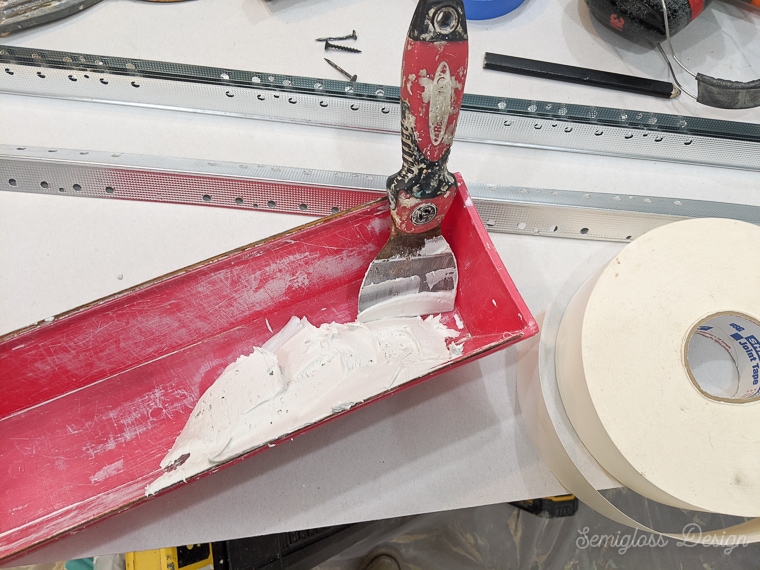
Supplies Needed
- Joint compound
- Mud pan
- Putty knives in several sizes (4″ pocketknife, half dozen″ knife and 10″)
- Drywall record
- Scissors
- Metal corner bead
- Paper faced metal corner bead
- Tin snips
- Sand paper
- Sanding sponges (I like these better for corners and difficult areas)
Prep Work for Mudding and Taping Drywall
Mudding is messy, so be prepared for that. We used plastic drop cloths and I actually regret not using the paper rolls to protect the footing.
Close all doors to bordering rooms to preclude the dust from getting everywhere in the house.
Consider the dust control joint compound. The dust falls to the ground faster instead of floating in the air and traveling effectually.
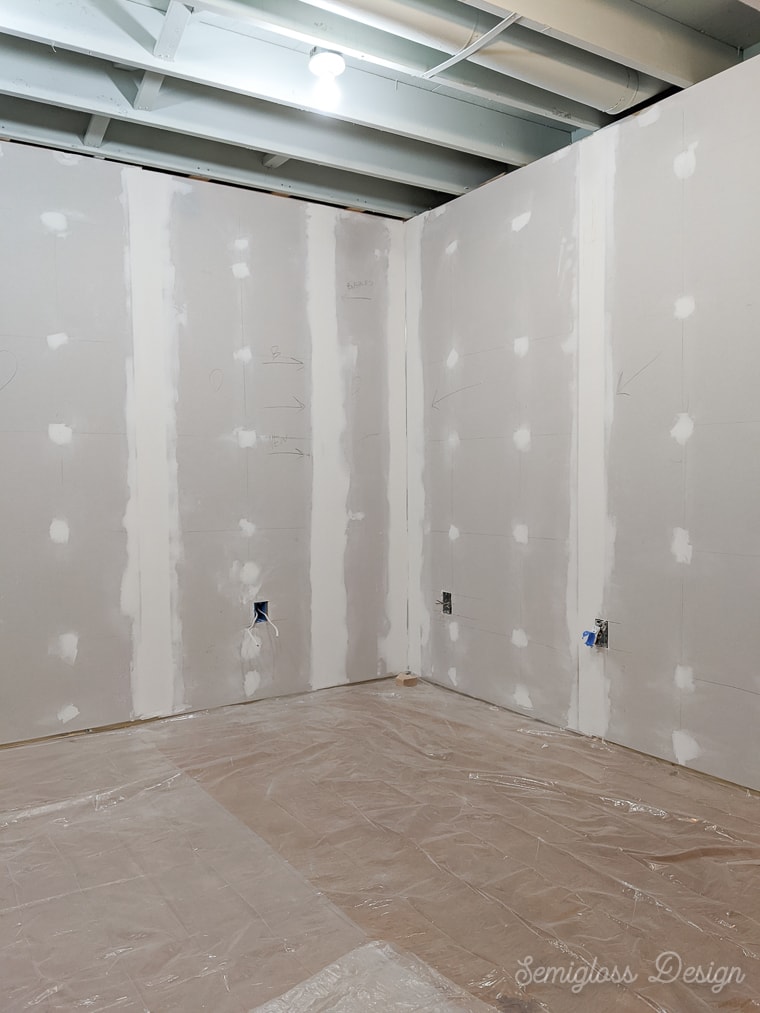
Get effectually the room and make certain that all screw heads are below the surface of the drywall.
Employ a putty pocketknife to meet if the spiral heads protrude. Any screw heads that beetle need to be screwed in more.
How to Comprehend Spiral Heads
- Use a putty knife to spread a sparse layer of joint compound over each screw head. Be sure to become the screw caput holes well.
- Let dry.
- Sand as needed.
- Apply some other glaze of articulation compound filling whatsoever holes yous may accept missed.
- Permit dry out.
- Sand.
- If necessary, utilise a 3rd coat and sand.
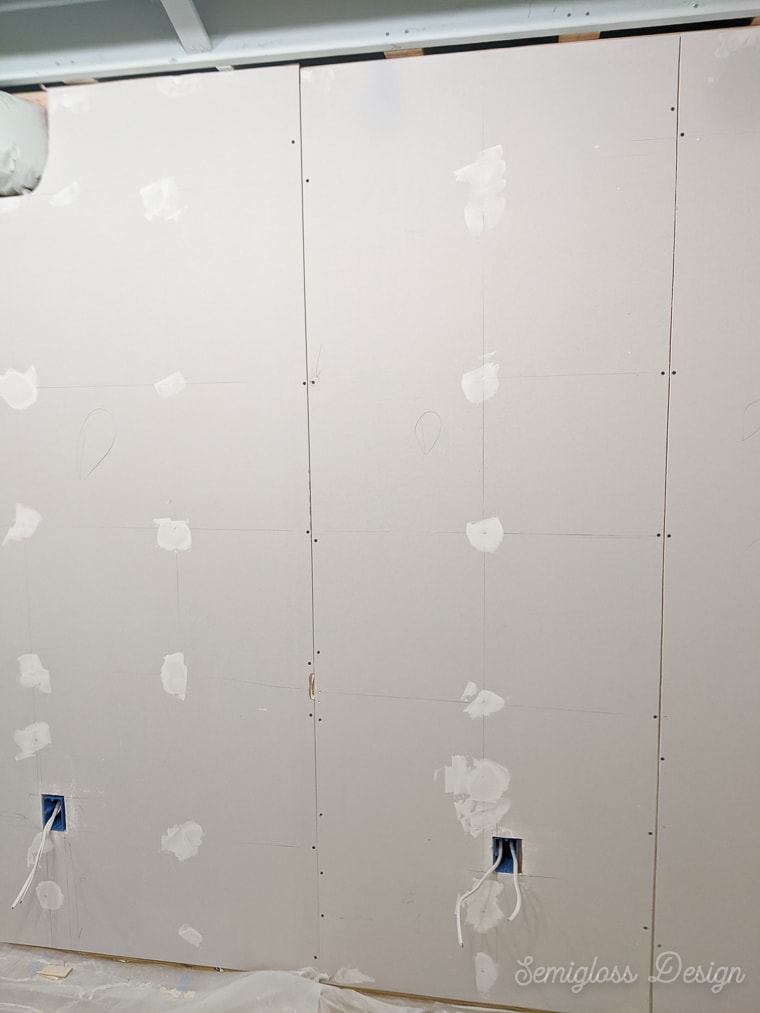
How to Mud and Record Seams
Be generous with the first layer of the joint compound nether the record. This helps it stick better and you won't have to go back and fix spots afterward in the process.
- Fill the seams with a generous layer of joint compound.
- Cut a piece of paper tape that'south long enough for the wall.
- Press it onto the join chemical compound, smoothing equally y'all go.
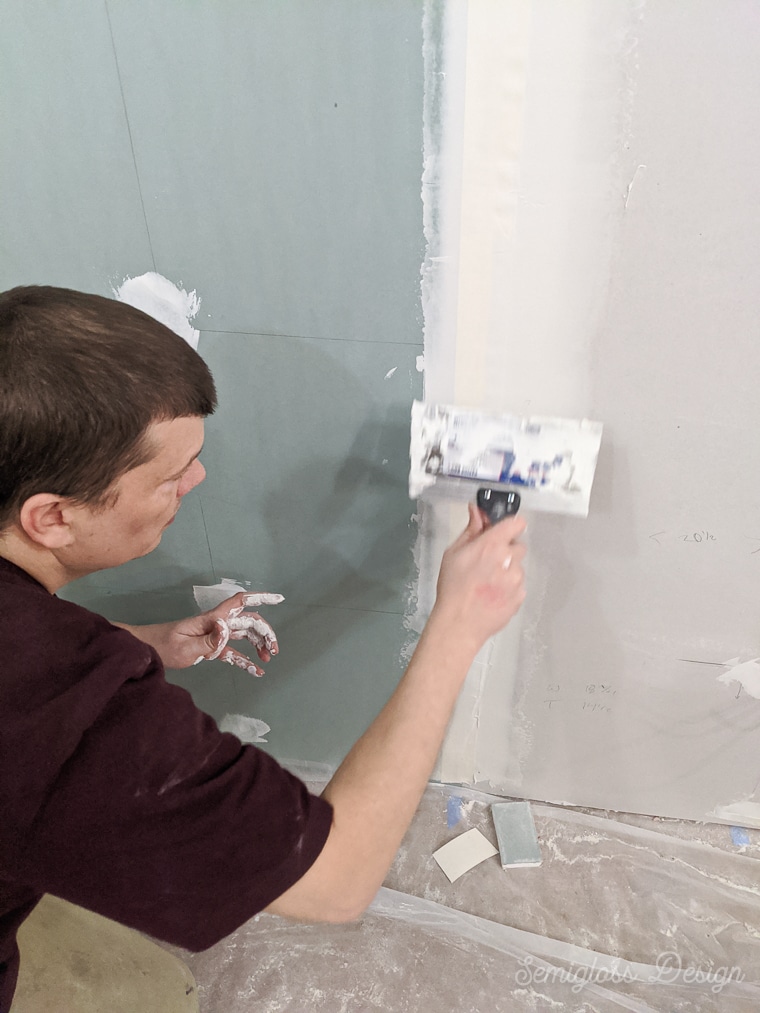
- Utilize a 4″ putty knife to smooth the record and remove any backlog mud.
- If the record isn't sticking, pull it away and add more than articulation compound.
- Continue along the wall until finished.
- Let the tape and joint compound dry.
- Sand lightly to remove any ridges. Be actually conscientious around the tape because it will tear and cause a funny texture.
- Once dry, use a 6″ putty knife to add together some other thin glaze of articulation compound on peak of the record.
- Continue until the room is finished.
- Let dry.
- Lightly sand away ridges.
- Add together some other glaze of joint compound using a larger putty knife (we used a x inch pocketknife.)
- Effort to fill any low spots.
- Go along around the room and let dry over again.
- Sand well. Utilize a block sander for difficult spots.
- If needed, add another coat in spots that need information technology.
- Allow dry and sand.
If your tape starts to bubble during the procedure, yous can remove the bubble by cutting information technology with a utility pocketknife, then apply more mud to the spot. Information technology will require a few light coats to embrace the spot.
How to Mud and Tape Corners
Corners are harder than straight seams. For outside corners, we used these metal corner pieces.
Nosotros also bought these pieces with paper and metallic corners to cover large gaps.
Since they are rigid, they are and then much easier to use than the folded tape method. I recommend using these for all corners instead of wrestling with the paper tape.
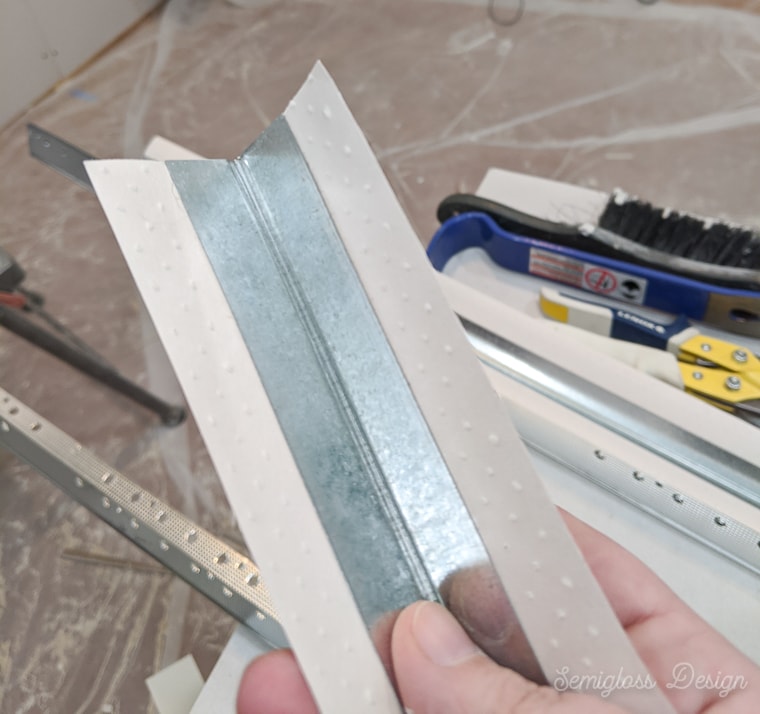
Outside metal corner edging volition need to exist nailed into the drywall (into studs.)
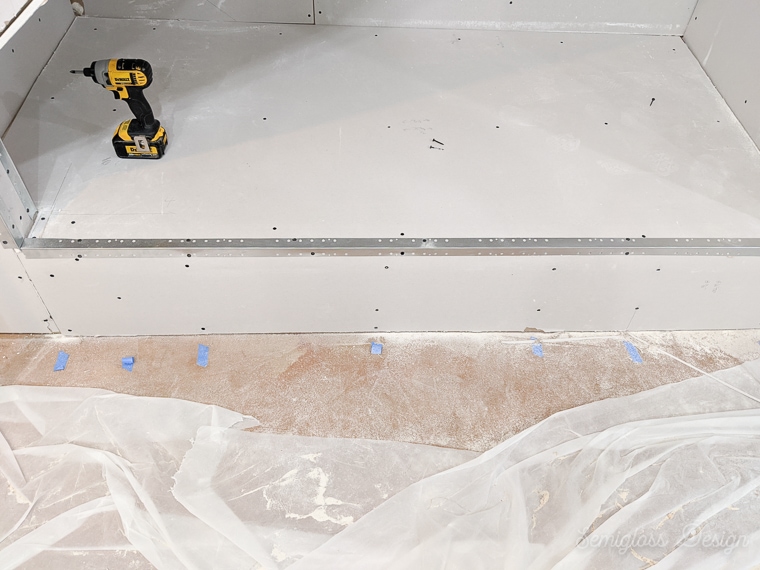
- Employ a generous coat of joint compound to the corner. If you have big gaps, you may need to concentrate more on the drywall edges than the actual gap.
- Measure the corner pieces and mark them with a sharpie. They can be cutting with tin snips.
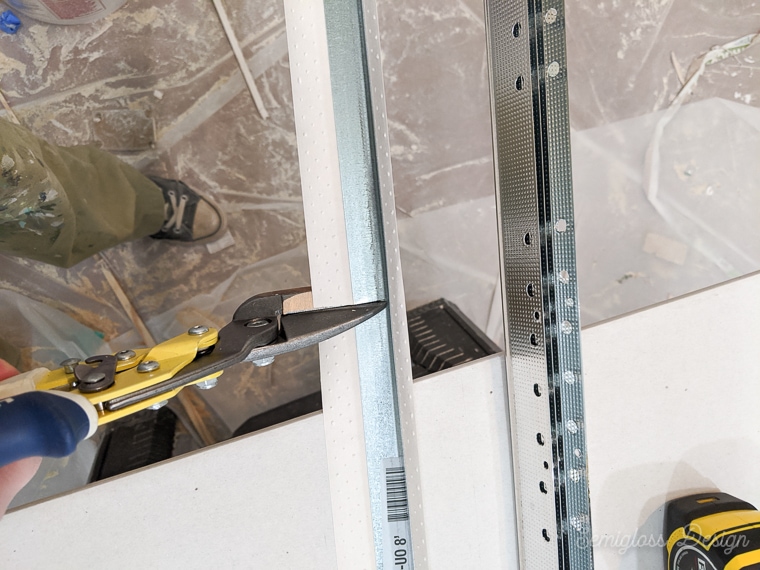
- Place them against the joint compound, smoothing every bit you become. Use a putty knife to remove excess joint chemical compound.
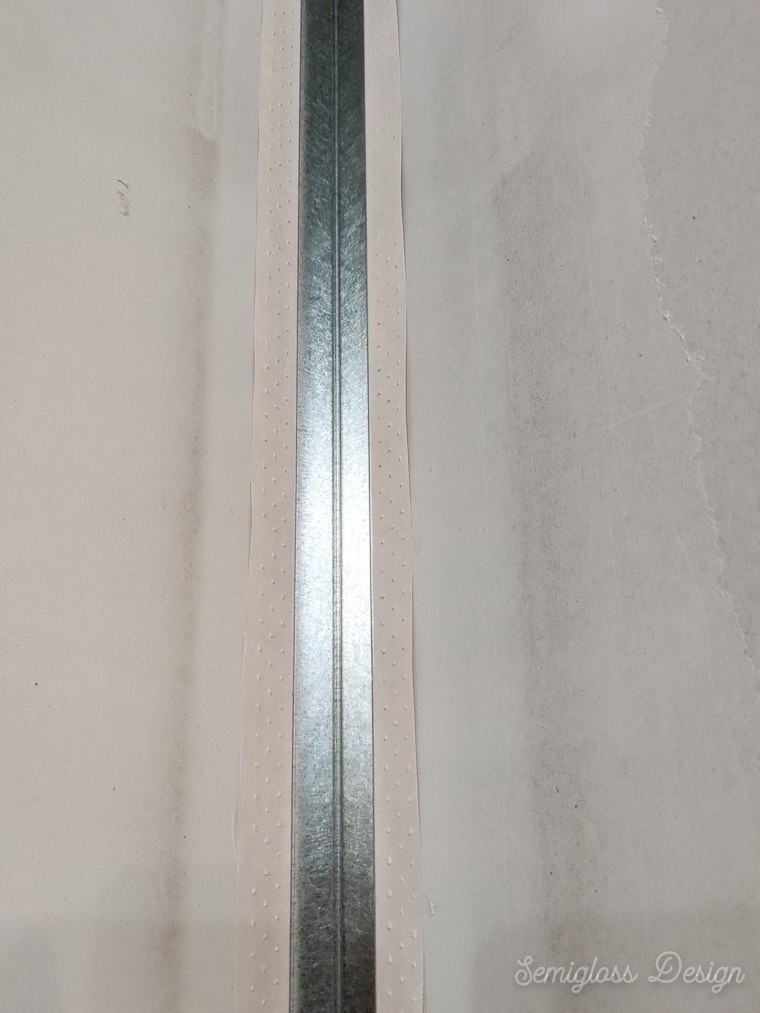
- Let dry and sand lightly if needed.
- Apply a coat of joint chemical compound on one side of the corner, smoothing every bit you go.
- Keep around the wall.
- Let dry out.
- Go dorsum and cover the other side with joint chemical compound. (It takes longer like this, only it prevents you from destroying one side as you work on the other.)
- Continue like this using larger putty knives as yous get to cover the previous layer.
- Outside corners are worked in the same manner, applying joint compound to i side then the other later on the first dries.
You may need to use a smaller putty knife for tight corners.
If you accept places where within corners meet, information technology'southward okay to overlap the tape to embrace the gaps. Just make certain the tape is "glued" in place with the joint compound.
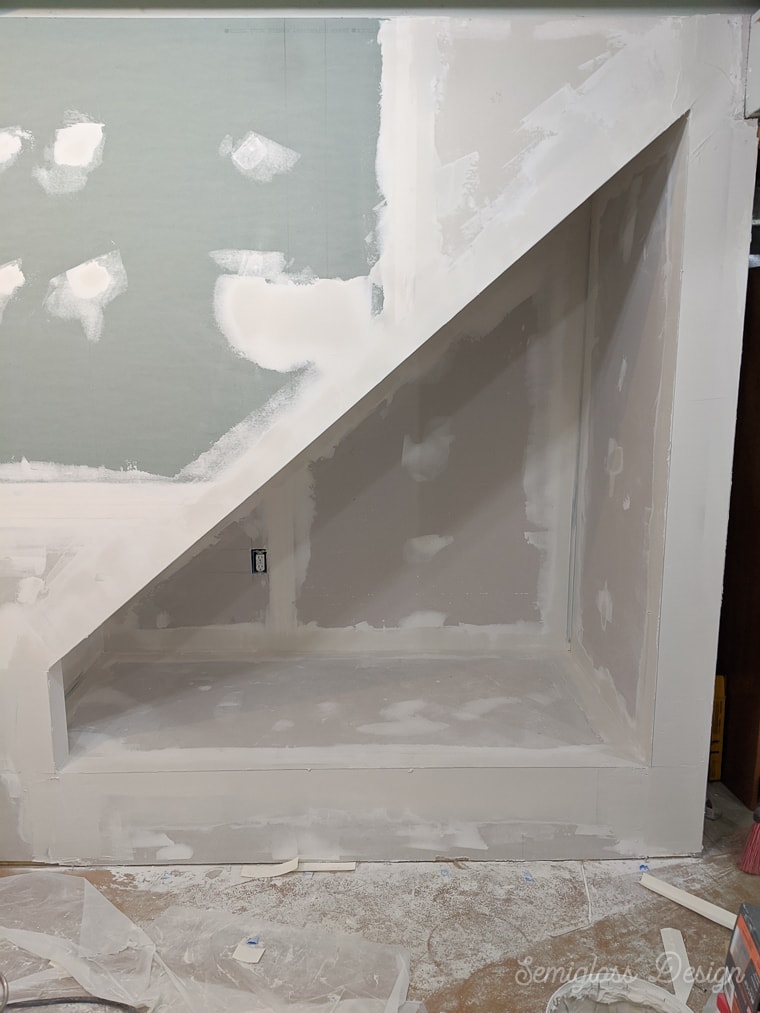
At that place are corner drywall knives, simply I've never found them to exist useful. Instead purchase nicer corner pieces and more than sizes of putty knives.
How Many Coats of Drywall Mud Exercise I Need?
Roofing the screw heads took fewer coats of drywall mud than the seams, near 2-3 coats.
Including the initial coat under the tape, each seam and corner took nigh 4 coats.
There will also exist places that need bear upon upwardly.
You lot may need more or less depending on your skill level.
The tape and corner pieces should be covered where you can't meet them anymore. The edges should be smooth where you lot tin can't feel them when you run your hand against them.
Uneven Drywall Joints
Whether you accept uneven drywall due to framing mistakes or using different thicknesses of drywall*, uneven drywall can exist stock-still.
*We used a few pieces of erstwhile drywall that we already had and although they were both 3/8″ thickness, in reality, they were off a little. I don't recommend this if you tin help information technology, though.
You will need to work slowly, in layers to correct this problem.
- Use the tape every bit directed above and permit dry out.
- Build up the layers on the lower part first so add to the higher part.
- Continue calculation layers of joint compound and sanding between coats.
- Using a sanding sponge is really helpful for these seams.
The Best Way to Sand Drywall
For general sanding, we used these handheld sanders with 220 grit sandpaper.
They sell up to 80 grit sandpaper, which I remember is actually overkill. Sandpaper with 220 grit works great.
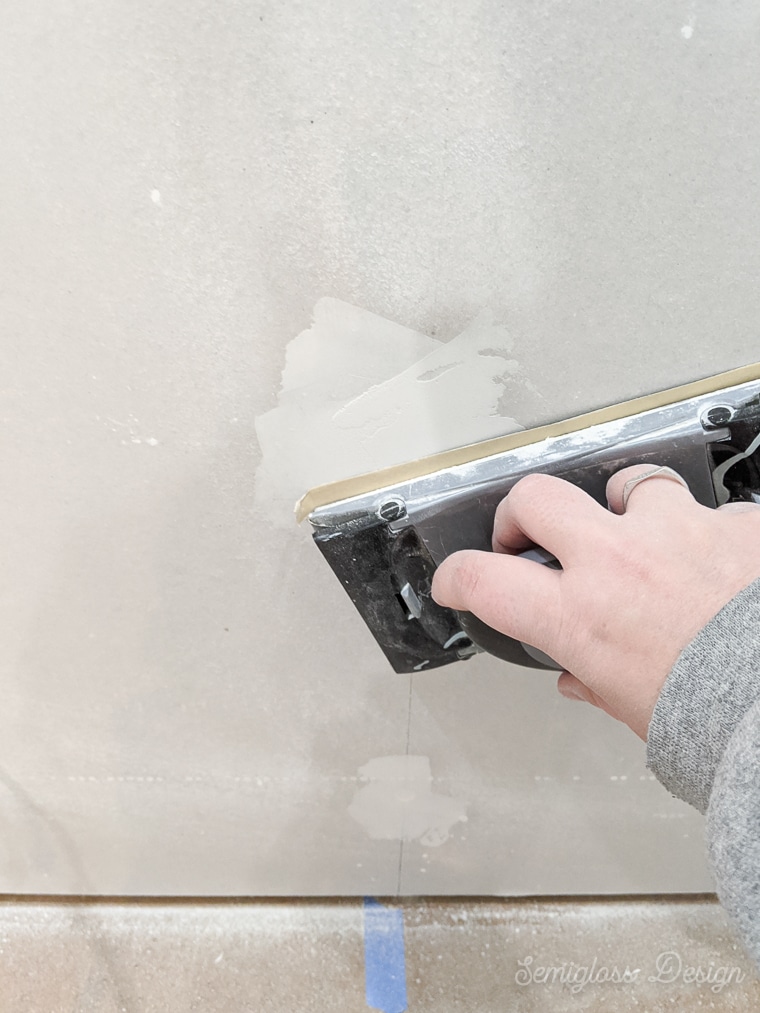
For tricky spots, I prefer these soft sanding sponges. They can be squished into catchy spots and are bully for uneven drywall sections.
If you're having problem with the sandpaper gouging your dried joint compound, try these soft blocks.
In the past, we've as well used a wet sanding technique. You utilise a damp sponge to remove the excess articulation compound.
It makes less mess, but information technology's harder to get a seamless look. Plus, information technology's possible to remove too much of your difficult piece of work.
Cleaning Up the Mess
- Remove the floor protection.
- Sweep us as much mess every bit you lot tin can.
- Use a shop-vac to remove debris from corners and edges. (Be sure you have a clean filter on the shop-vac for best results.) By the way, don't utilize your regular vacuum for this because drywall grit can harm the motor.
- Wipe the walls down with a microfiber rag. The walls will be super dusty.
- Utilise a damp rag on anything else in the room (or adjacent rooms.)
- Mop the floor as needed, changing the water frequently. If joint chemical compound landed on your floor, information technology volition come up with a bit of scrubbing.
IMPORTANT: Earlier Y'all Pigment
Raw drywall and joint compound needs to be primed before painting! Without primer, the drywall newspaper volition absorb the paint differently than the joint chemical compound and make your paint wait splotchy.
As well, be aware that joint compound will blot a lot of the primer.
I like this primer for walls because information technology'south pretty cheap but it does a great task. Plus, it cleans up with water.
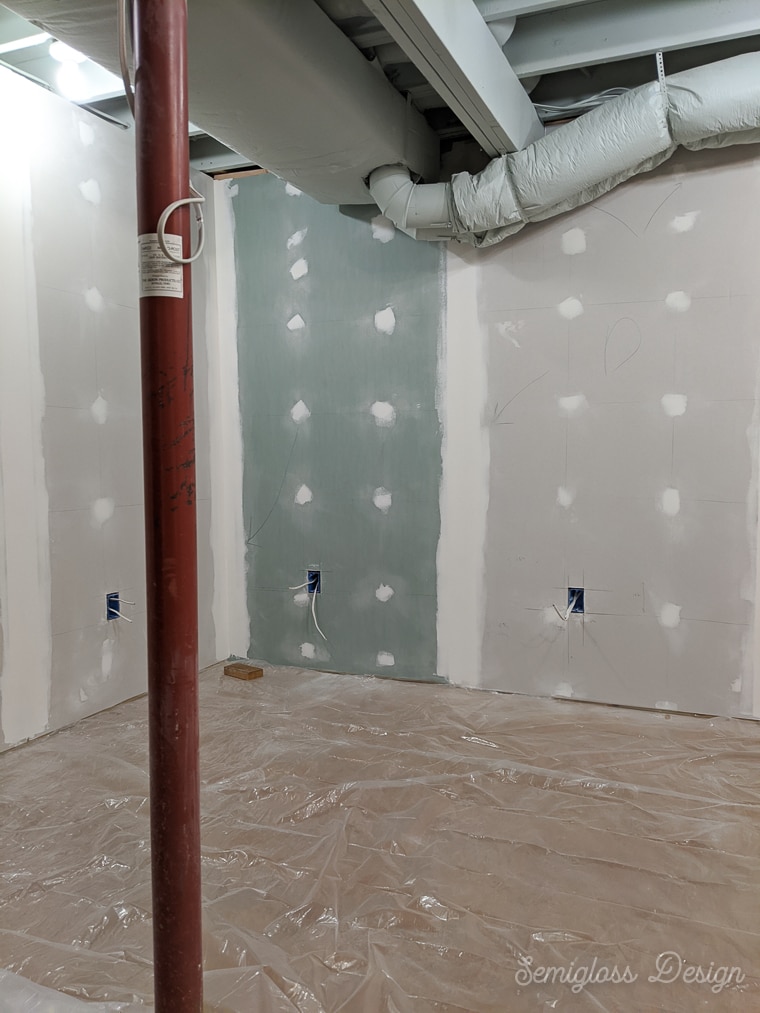
Tips and Tricks for Drywall Mudding
- Commencement with a modest putty knife and move on to larger putty knives as you go. This allows you to cover and smooth the areas that you previously covered.
- When working with articulation compound, ridges are easier to sand than low spots.
- Make clean equally you go to foreclose a huge mess at the end.
- Embrace your bucket of articulation chemical compound as you work. It can dry out and form chunky spots that are hard to work with.
- If you lot accept more one person working on mudding the drywall, buy ii or more mud pans and so you lot don't have to share or work out of the bucket.
- Perfection is overrated. Pigment covers a myriad of sins!
Painting the walls comes adjacent, then installing baseboards and trim!
You might too like:
- How to Paint an Unfinished Basement Ceiling
- How to Frame Basement Walls
- Choosing Lighting for a Basement
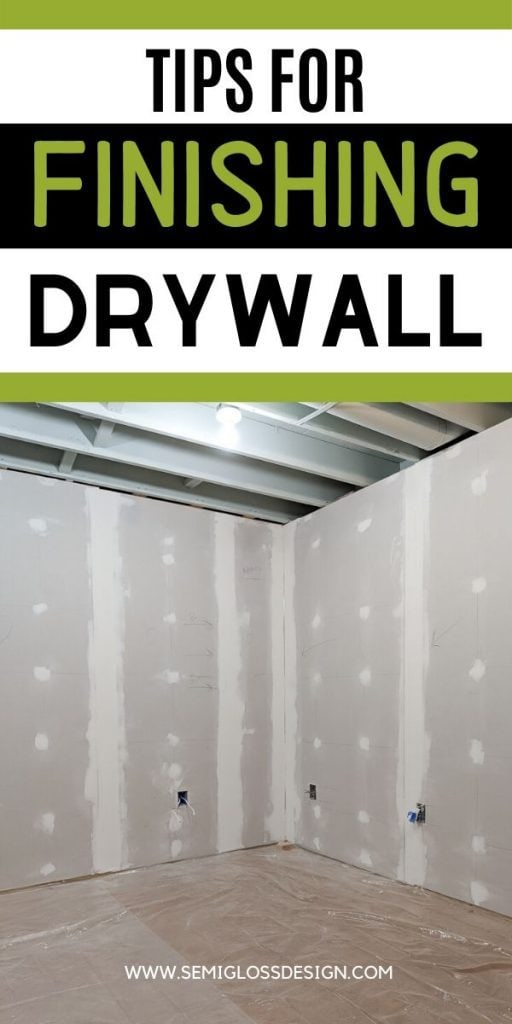
Pin for Subsequently!

Emy is a vintage obsessed mama of 2 DIYer who loves sharing affordable solutions for common home problems. You lot don't need a behemothic upkeep to create a lovely home. Read more…

How To Mud And Tape Drywall Repairs,
Source: https://www.semiglossdesign.com/everything-you-need-to-know-about-how-to-mud-and-tape-drywall
Posted by: shislergaidge.blogspot.com
0 Response to "How To Mud And Tape Drywall Repairs"
Post a Comment